


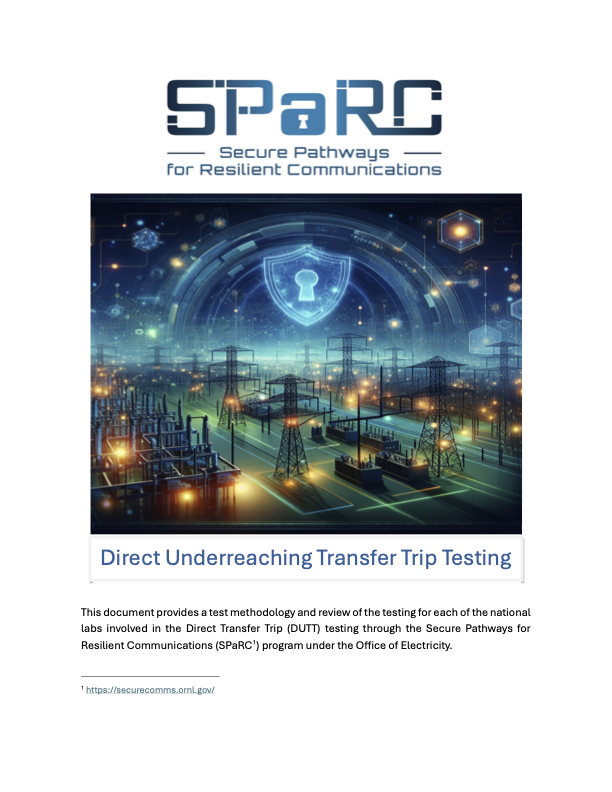
Direct Underreaching Transfer Trip Test
This project has several components that are critical for success including establishing baseline power-system testing across each lab for distance relaying on a transmission line, implementation of a protection scheme over communications for DUTT, testing the scheme to failure via multiple methods to impair the protection communication-protection protocol, and finally evaluate the relay performance under fault conditions.
May 2026
Best Practices for Grid Communications
Our nation's electric grid is transitioning from a centralized, producer-controlled network to a
distributed, consumer-interactive model that is often referred to as the smart gird. A fully functioning smart grid
will feature ubiquitous sensors throughout the transmission and distribution grid while continuing to balance electric
supply (generation) with consumer demand (load). These sensors will need to collect and share data with consistent and
well-defined latency, higher bandwidth, and two-way communications to transport information between grid utilities and
consumers (or prosumers) through distributed or cloud-based computing necessary to make that data actionable. Secure
communications are critical to achieve this smart grid vision and for the successful operation of the modern electric
grid.
October 2025
Deny-by-Default Network Port Security
Operational Technology (OT) networks [e.g., industrial control systems (ICS) and supervisory control and data acquisition (SCADA) systems] have unique cybersecurity challenges due to their decades long service life, high availability requirements, and limited visibility. OT networks often take credit for being "air gaped" (i.e. disconnected from the Internet) and all devices within the OT network can "talk" to each other--even if they should not. This SPaRC Technical Bulletin describes how the unique limitations of OT networks can become strengths when it comes to cybersecurity.
September 2025
Enhancing Network Operations and Cybersecurity with Network Management Systems
Network management systems have been widely accepted and implemented by the telecommunication industry, contributing to improved operational visibility and adding defense-in-depth for cybersecurity. This Secure Pathways for Resilient Communications (SPaRC) technical bulletin explores the benefits of deploying a network management system across electric utility communications infrastructure.
July 2025

7-8 GHz Point-to-Point Testing
This research project is an exploratory examination of co-mingled spectrum sharing in the 7 GHz band (7125 - 8400 MHz), the potentially associated interference, and implications...
October 2024
Guidelines for Next-Generation Grid Communications Architectures
The next-generation grid communications architecture enables utilities to enhance operational capabilities, reduce outage risks, and generally strengthen grid resilience. The end-to-end architecture presented here provides a holistic framework to build a reliable, flexible, and salable communication network that meets the critical needs of the modern grid and positions utilities for handling challenges with integrating a range of energy resources and enabling a carbon-free energy future.
October 2024
Grid Communications Technologies
The goal of this document is to demonstrate the foundational dependencies of communication technology to support grid operations while highlighting the need for a systematic approach for communications technology across a wide variety of electric utility operational processes.
July 2024
Understanding and Managing Quality of Service in Grid Communications
This white paper explores a series of attributes and characteristics of a network or communications system that together describe the overall performance of that network or system, called Quality-of-Service (QoS).
May 2024
Latency Implications for Grid Communications
This paper emphasizes the need for low-latency communication systems to manage this complexity, ensuring resilient and reliable energy infrastructure. The discussion extends to the challenges of coordinating DERs and the performance requirements of future communication systems in grid services and sets the stage for a comprehensive discussion on the need for flexible, low-latency, secure communication networks in managing future grid operations.
January 2024
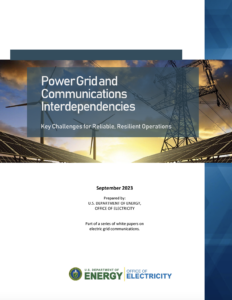
Power Grid and Communications Interdependencies: Key Challenges for Reliable, Resilient Operations
This paper focuses on the interdependencies between electric power and communications systems, highlighting three opportunities—service prioritization, load shedding, and direct transfer trip protocols—to improve grid reliability and resilience via collaboration between the sectors and with regulators.
September 2023

Secure Communications: Interoperability in the Power Grid
This white paper discusses the current state of secure communications interoperability in the electric power grid and delineates some of the challenges, including:
- Increasingly diverse entity ownership
- Incomplete standardization of tools and approaches at the edge
- Decentralized, market-driven evolution of grid architecture
- Varied and inconsistent regulation;
- Prioritization of communications investments in a cost-sensitive decision environment
September 2023
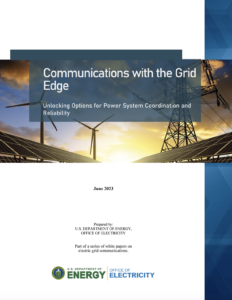
Communication with the Grid Edge: Unlocking Options for Power System Coordination and Reliability
This white paper characterizes the evolving nature of the grid edge, and the necessity of evolving communications network and architectures to maintain secure, reliable, and integrated grid edge devices with the rest of the grid system.
June 2023
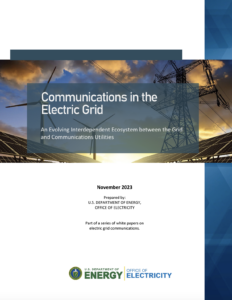
Communications in the Electric Grid: An Evolving Interdependent Ecosystem between the Grid and Communications Utilities
This white paper will briefly discuss several factors driving the continued electric grid evolution and the related communication requirements. These factors include (1) evolution of hardware, software, and communications used in the electric grid over the last several decades at unprecedented scales; (2) rapid adoption of variable, renewable distributed energy resources (DERs) and intelligent loads in the electric grid; and (3) an increased threat landscape due to more intense weather patterns and external actors.
June 2023